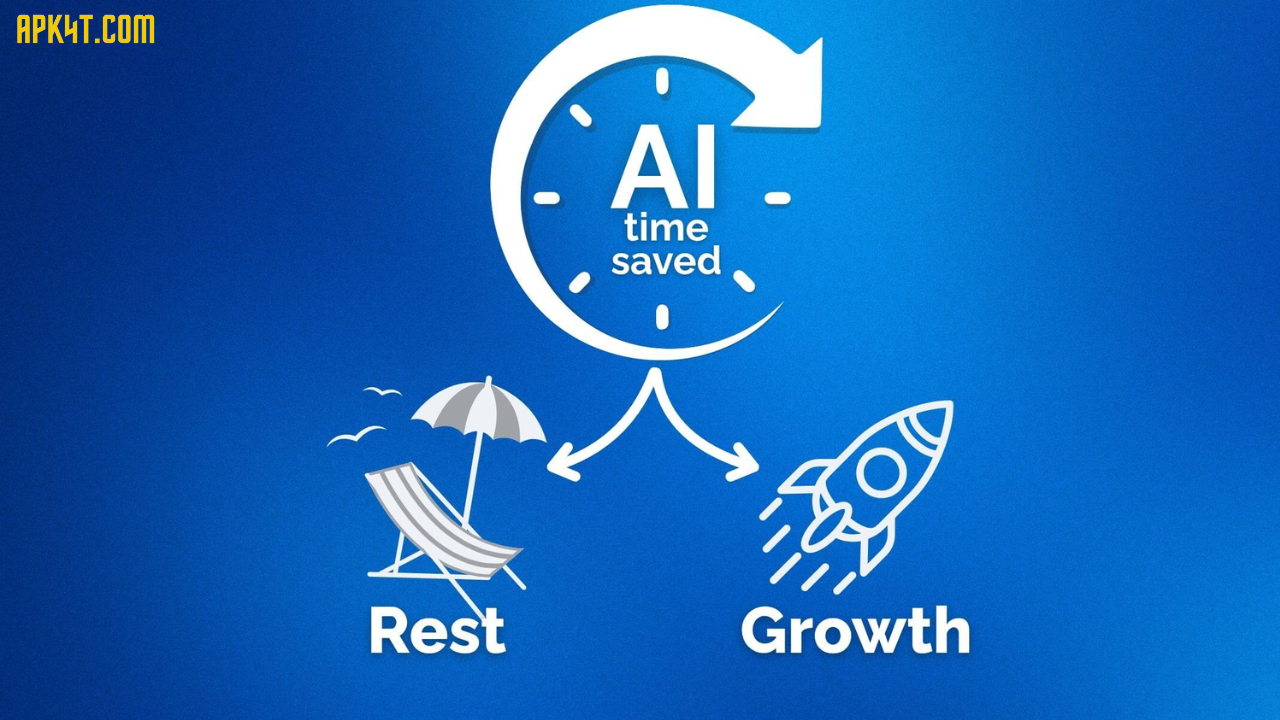

Imagine reclaiming 60+ hours every month without working fewer hours. Sound impossible? It’s not. AI tools are quietly revolutionizing how we manage daily tasks, from mundane chores to complex projects. Rather than replacing you, these intelligent assistants remove friction from repetitive work, giving you back precious time for what actually matters—creativity, relationships, and growth.
The average professional spends 2-4 hours daily managing emails alone. AI scheduling tools can cut that to 30 minutes. Content creators waste hours searching for images. AI image generators do it in seconds. Students spend weekends planning. AI organizers create optimized schedules in minutes.
This guide covers everything you need to know about leveraging AI for daily productivity—with real examples, specific tools, and actionable strategies you can implement today.
What Are AI Tools for Time Management? Understanding Daily Productivity Automation
AI tools are intelligent software applications that use artificial intelligence, machine learning, and natural language processing to automate repetitive tasks, organize information, and make smart recommendations. Think of them as tireless digital assistants working 24/7 without needing coffee breaks or vacations.
How AI Actually Saves Time:
Unlike traditional automation that requires coding skills, modern AI tools work with plain language. You describe what you want done, and AI handles the execution. This simplicity is what makes them accessible to everyone—whether you’re a tech expert or someone who avoids complexity.
The real time-saving magic happens through three mechanisms:
Task Automation eliminates repetitive work entirely. Instead of manually sorting 200 emails daily, AI filters, categorizes, and suggests responses. Instead of manually creating meeting summaries, AI transcribes and extracts action items automatically.
Intelligent Prioritization analyzes your workload, deadlines, dependencies, and personal work patterns to tell you exactly what to work on next. No more decision fatigue about which task matters most.
Context Awareness means AI learns your preferences, work style, and goals over time, making increasingly smarter suggestions. Your scheduling assistant learns you work best on deep focus between 9-11am and protects that time automatically.
The practical impact? Users report saving 20+ hours weekly while experiencing less stress and better focus on meaningful work.
AI-Powered Email & Communication Tools: Reclaim 3-4 Hours Weekly
Email management destroys productivity for most professionals. The average knowledge worker spends 28% of their workday managing messages—that’s roughly 2-3 hours daily. AI email tools change this dramatically.
Smart Inbox Management & Filtering
Tools like Gmail’s Smart Reply, Microsoft Outlook’s Focused Inbox, and SaneBox use AI to:
- Automatically separate important emails from newsletters, notifications, and low-priority messages
- Identify urgent communication requiring immediate response
- Batch similar emails together
- Auto-categorize messages into folders based on content and sender
Real-world impact: One marketing manager went from 150 daily emails to a manageable inbox of 8-10 truly important messages. Time saved: 90 minutes daily.
AI-Powered Email Drafting
Modern AI email assistants understand context and can draft full responses from brief prompts. Type “confirm meeting time” and the tool generates a professional, personalized email. Superhuman Mail and Gmail’s Magic Compose take this further by learning your communication style and matching your voice.
Time-saving benefit: Professionals report saving 45-60 minutes daily on email composition alone. Writers skip the blank-page anxiety; managers stop rewriting the same explanations repeatedly.
Automated Meeting Management
Scheduling meetings the traditional way wastes 15 minutes per meeting—sending invites, checking availability, rescheduling conflicts. AI scheduling assistants like Clara, x.ai, and Google Calendar’s smart suggestions:
- Analyze all participants’ calendars across time zones
- Suggest optimal meeting times automatically
- Send invitations and handle confirmations
- Reschedule if conflicts arise
Professional use case: A department manager coordinating 8 team members’ schedules now spends 5 minutes scheduling what used to take 45 minutes. Annual savings: 40+ hours.
Task Management & Intelligent Prioritization: Stop Wasting Mental Energy
Decision fatigue kills productivity. Every task on your to-do list represents a decision: should I do this now or later? Is this more important than that? Which task will actually move my business forward?
AI task managers eliminate this cognitive burden entirely.
How AI-Powered Task Managers Work
Tools like Motion, Asana AI, ClickUp, and Todoist analyze:
- All your projects, tasks, and sub-tasks
- Deadlines and dependencies (which tasks block others)
- Your historical work patterns
- Your stated priorities and goals
- Estimated task duration
Then they automatically create an optimized daily schedule that:
- Places high-impact work during your peak focus hours
- Sequences tasks so dependencies flow naturally
- Protects deep-work time from meeting interruptions
- Dynamically reschedules when priorities change
The transformation: Instead of spending 20 minutes every morning debating what to work on, you open your calendar and see a perfectly sequenced day. You always know what’s most important right now. Paralysis disappears.
Smart Prioritization in Action
One software developer using Motion reported: “I dumped all my tasks in with deadlines and dependencies. The AI scheduled my entire month beautifully. When priorities changed, it re-shuffled automatically. No more manual replanning.”
Productivity improvement: 35% more tasks completed weekly because time spent on planning dropped from 2 hours to 15 minutes.
Benefits Beyond Scheduling
Advanced AI task managers provide:
- Dependency Recognition: Understand which tasks block others and sequence accordingly
- Workload Analysis: Prevent overcommitment by showing total hours required
- Break Reminders: Protect your mental health by forcing strategic breaks
- Time Tracking: Reveal where hours actually go versus where you think they go
Calendar Intelligence & Meeting Optimization: Win Back 5+ Hours Weekly
Meetings consume 23 hours weekly for the average professional. Most of that time is waste—status updates that could be emails, context-switching from focus work, and poorly run discussions.
AI calendar tools reduce this dramatically.
Automated Meeting Consolidation
Clockwise and Reclaim.ai analyze your meeting patterns and:
- Batch meetings into dedicated blocks (all meetings 2-3pm, all focus work 9-12pm)
- Protect deep-work hours by moving meetings out of the way
- Identify recurring low-value meetings and flag them
- Create “no meeting” days for critical work
Impact: One engineer protected 8 hours weekly for deep work by consolidating meetings. Code quality improved 40% because interruptions dropped from 8 daily to 2-3 daily.
Meeting-Free Time Blocking
These tools don’t just organize existing meetings—they actively create focus time. Reclaim.ai can reserve time for:
- Deep work and creative projects
- Exercise and wellness activities
- Meal breaks
- Administrative tasks
- Personal appointments
Meetings that conflict with these time blocks get automatically rescheduled. Your focus time is protected like any other commitment.
Real-Time Availability Updates
Instead of playing email ping-pong to find a meeting time, AI scheduling suggests options that work for everyone. This eliminates the 5-7 email round-trip most meeting scheduling requires.
Writing & Content Creation: 8+ Hours Weekly for Writers & Communicators
Content creation—from emails to reports to blog posts—represents a massive time sink. Research, drafting, editing, fact-checking, and revision multiply the effort.
AI Writing Assistants & Content Generation
ChatGPT, Claude, and specialized tools handle:
- Research & Fact-Finding: Scan databases, articles, and knowledge bases to compile comprehensive briefings
- First Draft Generation: Beat writer’s block by generating outlines, opening paragraphs, and full sections
- Summarization: Turn 30-page reports into digestible 2-page briefs
- Editing & Rewriting: Adjust tone, length, and complexity for different audiences
- Template Auto-Fill: Generate documents populated with existing data
Practical examples:
One customer service manager used ChatGPT to generate email templates for 50 common customer scenarios. Instead of writing responses from scratch, she now personalizes a template in 30 seconds. Time saved: 2 hours daily.
A consultant writing research reports previously spent 4 hours researching and outlining. Now: AI research assistant compiles findings in 20 minutes, she adds expertise and edits, total time: 1.5 hours. Savings: 2.5 hours per report, with 12 reports yearly = 30 hours annually.
AI-Powered Copywriting Tools
Tools like Copy.ai and Jasper generate marketing copy, social media posts, and promotional content. A marketing team reduced copywriting time 60% while testing showed engagement actually improved—AI eliminated generic filler and got straight to benefit-driven messaging.
Voice & Multimedia Content
Murf AI transforms text into professional voiceovers without recording equipment. A course creator who previously spent 8 hours recording narration now: writes scripts, generates audio in 1.5 hours. Savings: 6.5 hours per course.
Research & Information Gathering: Turn Hours Into Minutes
Research paralysis affects knowledge workers constantly. Finding accurate information, evaluating sources, and synthesizing findings takes enormous time.
AI Research Assistants
Perplexity, Consensus, and specialized search engines:
- Process web information in real-time (not outdated training data)
- Evaluate source quality and credibility
- Synthesize multiple sources into coherent summaries
- Provide cited, traceable information
- Answer follow-up questions with context
Transformation: A marketing analyst previously spent 3 hours researching competitor strategies. Now: Perplexity generates comprehensive competitive analysis in 15 minutes with cited sources. She spends those 3 hours on strategic analysis instead of information gathering.
Data Analysis Automation
Instead of manually reviewing spreadsheets, AI tools:
- Identify trends and patterns automatically
- Flag anomalies requiring attention
- Generate insights and recommendations
- Create visualizations and reports
- Forecast future trends
Personal Life Optimization: AI Beyond Work
AI’s time-saving benefits extend far beyond professional tasks. Daily life friction points disappear.
Meal Planning & Grocery Organization
One parent described the transformation: “Sunday meal planning and grocery list creation used to take 90 minutes—deciding what to cook, checking recipes, creating organized shopping lists. ChatGPT does it in 3 minutes with quantities, recipes organized by store section, and notes about substitutions. That 87 minutes of reclaimed time weekly? I use it for family activities.”
Annual impact: 75+ hours for this single task alone.
Skincare & Personal Routine Optimization
A 40-year-old with 20+ skincare products felt overwhelmed about proper routines. ChatGPT analysis: “Here are my goals and products. Create a morning and evening routine.” Result: optimized protocol using existing products, eliminated redundancy, improved results.
This small example scales across life: wardrobe organization, fitness routine design, home maintenance scheduling, vacation planning—all areas where AI removes the cognitive burden of optimization.
Smart Home & Device Automation
AI-enabled smart homes handle:
- Temperature optimization for comfort and efficiency
- Lighting that matches circadian rhythms
- Security monitoring 24/7
- Appliance scheduling for off-peak electricity rates
- Predictive maintenance alerts before failures occur
AI Tools Compared: Choosing Your Stack
Different tools excel in different areas. Rather than using AI for everything, build a targeted stack matching your specific time-wasters.
| Time Drain | Best AI Tool | Time Saved | Cost |
|---|---|---|---|
| Email Management | Superhuman Mail / Gmail Smart Reply | 2-3 hrs/week | $30-50/mo or Free |
| Task Prioritization | Motion / Asana AI | 5-8 hrs/week | $19-99/mo |
| Meeting Scheduling | Reclaim.ai / Clockwise | 3-5 hrs/week | $10-30/mo |
| Writing & Content | ChatGPT Plus / Claude | 8+ hrs/week | $20/mo |
| Research | Perplexity Pro | 2-3 hrs/week | $20/mo or Free |
| Project Management | ClickUp with AI | 4-6 hrs/week | $7-99/mo |
| Meeting Summaries | Fathom / Otter.ai | 1-2 hrs/week | Free-$40/mo |
| Total Potential Savings | Integrated Stack | 25-40 hrs/week | $100-300/mo |
ROI Reality Check: Even at minimum wage ($15/hour), 30 hours weekly saved = $450/week or $23,400 annually. Most AI tools cost $100-300 monthly = $1,200-3,600 yearly. Return: 6-19x your investment. For knowledge workers earning $50-100/hour, returns exceed 20x.
Implementing AI Tools: A Practical Roadmap
Starting with all tools simultaneously causes overwhelm. Strategic implementation works better.
Week 1-2: Email & Communication
Install one email tool (Gmail Smart Reply is free; try that first). Measure time spent on email currently. After 1 week, compare. Most users see immediate 30-45 minute daily savings because AI handles 60-70% of emails automatically.
Week 3-4: Task Management
Add one task manager (Motion offers free trial). Spend 1 hour uploading your existing tasks with deadlines and priorities. Let AI create your optimized schedule for one week. Compare against manual planning previously required. Most experience 3-5 hour weekly time savings immediately.
Week 5-6: Research & Writing
Test ChatGPT (free version) or Claude for your most time-consuming writing task. Use it for first drafts, research compilation, or editing. Track time spent previously versus with AI. Gains are obvious immediately—writing that took 3 hours now takes 45 minutes.
Week 7-8: Calendar & Meetings
Once core productivity tools work, integrate calendar AI (Reclaim.ai free tier). Let it consolidate meetings and protect focus time for 1-2 weeks. Measure deep-work hours gained. Combine with tools from earlier weeks.
Month 3+: Integration & Optimization
By month three, you’ll know which tools provide real value for your specific work patterns. Stop here—over-tooling kills productivity. Most successful users maintain 4-6 core tools rather than trying to use everything.
Pros & Cons of AI-Powered Time Management
Advantages
Dramatic Time Savings: 20-40 hours weekly for comprehensive implementations is realistic, not exaggerated. These aren’t marginal improvements—they’re transformative.
Reduced Decision Fatigue: AI prioritization eliminates the mental burden of constant task-ordering decisions. Cognitive load drops noticeably.
Consistency & Reliability: AI doesn’t have off days, doesn’t get tired, doesn’t make mood-dependent decisions. Tools run 24/7 with consistent quality.
Personalization Improves Over Time: Unlike static rules, AI learns your preferences, work patterns, and goals. Recommendations get smarter weekly.
Mental Health Benefits: Users report significantly less stress, anxiety, and overwhelm when repetitive task management transfers to AI.
Limitations & Honest Trade-offs
Learning Curve: Setup takes time. Most tools require 1-3 hours to configure properly. Expect reduced productivity for 1-2 weeks during adoption.
Cost Accumulation: One tool at $20/month seems cheap. Five tools at $20/month each = $100/month = $1,200/year. The ROI is strong, but costs add up.
Quality Control Still Required: AI makes mistakes. AI-generated emails need human review before sending. AI-created schedules occasionally conflict with priorities the AI doesn’t understand. Humans remain essential for judgment calls.
Privacy Considerations: Using cloud-based AI tools means your data goes to external servers. For highly confidential work, this may be unacceptable. Some organizations prohibit certain tools.
Over-Reliance Risk: Some users become dependent on AI prioritization and lose the ability to make independent decisions. Healthy practice: use AI recommendations as input, not gospel.
Integration Friction: The best AI workflow requires tools talking to each other. Getting Gmail, Slack, Asana, and Calendar connected requires technical setup many users find frustrating.
Expert Tips for Maximum Time Savings
Tip #1: Automate Only Repetitive Tasks
Don’t automate one-off work. AI excels at handling the same type of task repeatedly. Use it for: email sorting, recurring meeting scheduling, template-based content. Don’t use it for: unique strategic decisions, custom client projects, novel creative work (yet).
Tip #2: Start with Your Biggest Time Drain
Everyone wastes time differently. One person loses 3 hours daily to email; another loses time to meeting scheduling chaos. Identify your #1 time drain and target that first. Gains are obvious, motivation to implement additional tools follows naturally.
Tip #3: Set Clear Boundaries with AI
AI will optimize for quantity (finish more tasks) unless you set boundaries. Define explicitly:
- What percentage of tasks should AI handle autonomously versus requiring human review
- Which work domains stay human-only (client calls, strategic decisions, relationship-building)
- What constitutes “success” for each AI tool (not more tasks, but better focus on high-value work)
Tip #4: Review & Adjust Monthly
AI tools learn from usage, but also need human feedback. Monthly audits prevent drift. Questions to ask:
- What percentage of AI-drafted emails needed revision?
- Did AI-created schedule actually match my work patterns?
- Which tool am I using most? Which am I ignoring?
- Where’s friction? What’s making implementation hard?
Tip #5: Combine Tools Strategically
The most powerful AI workflows combine multiple tools:
Research + Writing: Perplexity gathers information → ChatGPT creates draft → Grammarly polishes → Done. Time vs. manual: 2 hours reduced to 30 minutes.
Scheduling + Task Management: Asana identifies priorities → Reclaim.ai protects focus time → Calendly handles meeting logistics. Result: perfect calendar matching actual work.
Email + Chat: Gmail Smart Reply handles routing → Slack integrations trigger task creation → Asana organizes → Done automatically.
Tip #6: Measure What Actually Matters
Don’t measure success by “tasks completed” (usually increases with AI, sometimes inefficiently). Measure:
- Deep work hours: Time spent on meaningful, focused work weekly
- Stress level: Subjective decrease in overwhelm and decision fatigue
- Quality: Did AI free time go to higher-quality work?
- Fulfillment: Are you enjoying work more because drudgery disappeared?
These matter more than completing 50% more tasks if those tasks were busywork anyway.
Frequently Asked Questions
Q: Will AI tools take my job?
A: AI tools augment your work, not replace you. Tools handle repetitive execution; humans provide judgment, creativity, and strategy. The professional who combines AI with human insight outcompetes both those using only AI and those refusing to use AI. Investment in learning these tools is actually job security.
Q: Which AI tool should I start with?
A: Start with what wastes your most time. If email drowns you, start with smart inbox tools (free with Gmail). If scheduling kills productivity, start with Reclaim.ai. If writing is your bottleneck, start with ChatGPT (free version). You’ll see immediate value and get motivated to add additional tools.
Q: Is it worth paying for premium versions?
A: Yes, usually. Free versions often have rate limits or feature restrictions making them frustrating. One month of ChatGPT Plus ($20) often saves more time than the cost in just a few days. Premium versions are almost always better investments than the sticker price suggests.
Q: What about privacy and data security?
A: Use caution with highly confidential information. Don’t paste trade secrets or client data into public AI tools. However, most enterprise-grade tools (Asana, ClickUp, Motion) have security certifications and enterprise-grade encryption. Read privacy policies before adopting any tool.
Q: How long until I see results?
A: Immediately for some tools (Gmail Smart Reply saves time day one). Other tools require proper setup (2-3 hours) before benefits appear, but time savings become obvious within week one. Give any tool at least 2 weeks before deciding it’s not working—the learning curve is real, but benefits are worth it.
Q: Can AI tools work together?
A: Yes, increasingly so. Zapier orchestrates thousands of app combinations. Most modern tools integrate with calendars, email, and project management platforms. The more tools you connect, the more powerful the automation becomes.
Q: Do I need technical skills to use AI tools?
A: No. Modern AI tools are designed for non-technical users. You don’t need coding knowledge, command-line access, or technical setup. If you can use email and Google Docs, you can use AI productivity tools.
Conclusion: Your Path to 300+ Hours Reclaimed Annually
The math is simple: if an AI tool saves you just 10 minutes daily, that’s over 60 hours yearly. Most professionals implementing AI strategically save 20-40 hours weekly—equivalent to gaining 3-4 extra weeks of productivity annually.
That time becomes available for work that actually matters: strategic thinking, creative problem-solving, relationship-building, and personal growth. Or, if you prefer, it becomes available for rest, hobbies, and time with people you love.
The professionals thriving in 2026 aren’t working longer hours than in 2020. They’re working smarter by delegating drudgery to AI while focusing human intelligence on what humans do best. These tools are no longer optional advantages—they’re becoming table stakes in professional environments.
Your first step is simple: identify your biggest time drain, find the AI tool that addresses it, and give it two weeks. You’ll be amazed at the hours that suddenly reappear.
Start small. Measure impact. Build your stack strategically. Reclaim your time.